- God of War Sons of Sparta worth it? A mid-tier retro prequel with solid exploration but floaty combat.
- Story setup: Young Kratos and his brother Deimos in a smaller, grounded Spartan adventure.
- Structure: Metroidvania maps spiral outward from Sparta with ability-gated backtracking.
- Combat verdict: Functional but lacking impact; finishers feel tame compared to the mainline series.
- Best for: Metroidvania fans curious about a young Kratos; skip if you expect mainline brutality.
Is God of War Sons of Sparta Worth It? The Short Answer
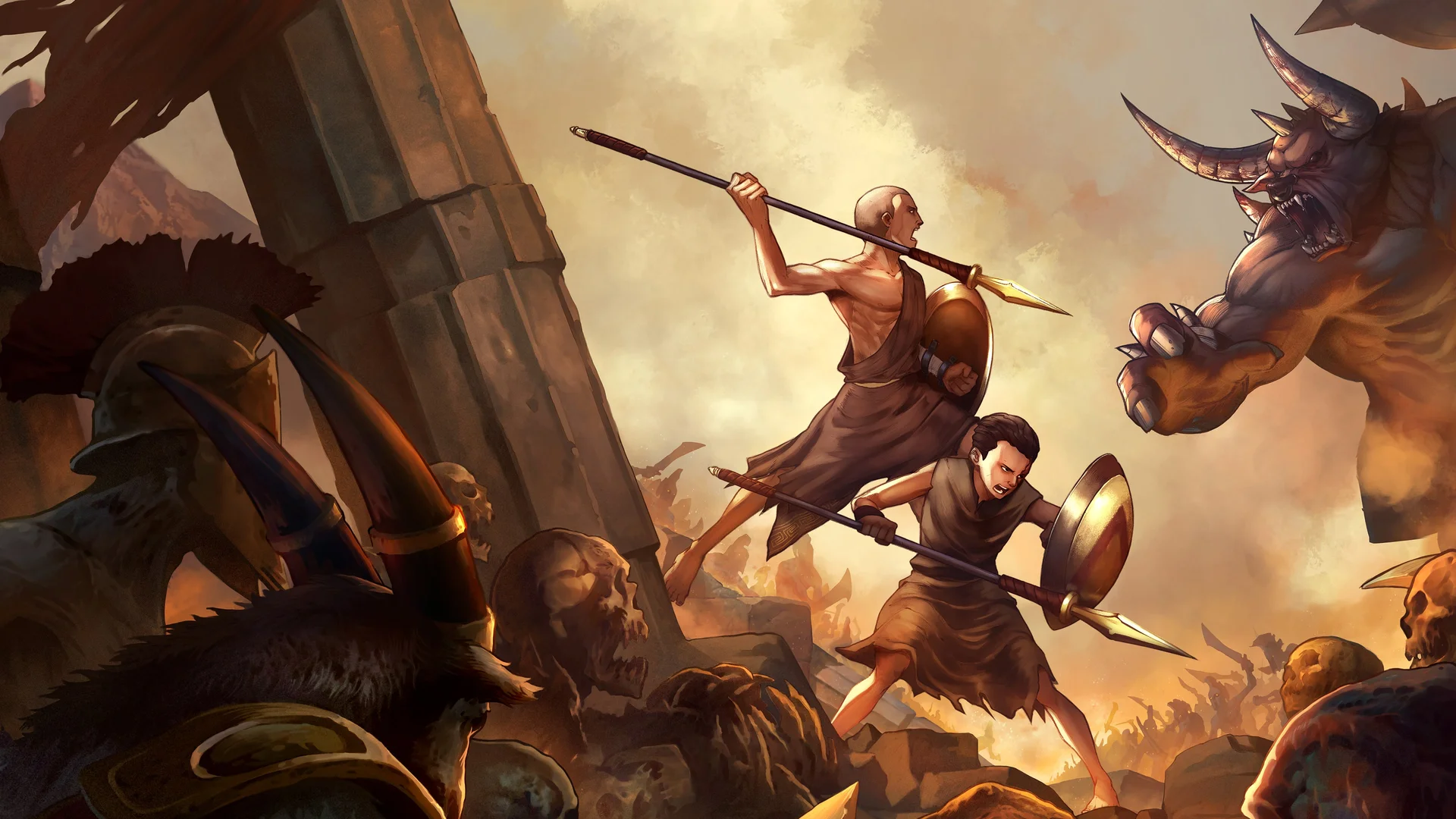
So, is God of War Sons of Sparta worth it? The honest answer: it depends on what you expect. This is not the mainline series compressed into 2D. It is a smaller prequel starring a young Kratos fighting alongside his brother Deimos, with lower stakes and a distinctly different tone — closer to a Spartan detective adventure than a war against Olympus.
Video Highlights:
- Young Kratos and Deimos team up in a grounded prequel story
- Color-coded combat: red dodges, blue blocks, yellow parries, purple avoids
- Metroidvania progression with tools like the sling and flaming branch
- Temples double as fast travel hubs and upgrade points
- Verdict: playable, occasionally fun, rarely thrilling — a solid middle-ground title
The core tension of this game is simple: good ideas, messy execution. Nothing about it is broken — it runs, it functions, it delivers a structured adventure. But the God of War name sets expectations sky-high, and a "perfectly serviceable" experience can feel like a letdown when you expect god-slaying crunch.
If you go in expecting the full force of the mainline series translated into 2D form, you will likely walk away disappointed. Treat this as a smaller prequel adventure with rough edges and a few interesting ideas instead.
Combat Review: Where the Game Wobbles
Combat is the weakest pillar. Animations look stiff, enemies crumble rather than react with weight, and attacks lack the sense of impact the franchise is famous for. Finishers — the series' calling card — feel tame: Kratos lightly swats an enemy, colorful particles pop, and that's it.
The color-coded defense system adds a layer of complexity:
| Attack Color | Required Response | Notes |
|---|---|---|
| Red | Dodge | Cannot be blocked |
| Blue | Block | Standard guard works |
| Yellow | Parry | Timing-based counter |
| Purple | Avoid entirely | Do not touch it |
On top of that, some enemies carry colored aura shields that demand specific counters, which can make fights feel like a multiple-choice exam rather than a natural combat rhythm.
There are interesting mechanics buried underneath, though:
- Environmental throws: Toss objects at enemies for creative damage
- Colored orb drops: Red for currency, blue for magic, yellow for spirit, green for health
- Attack-to-drop influence: Spirit attacks generate more stun and drop health
On normal difficulty, the color system is not punishing — you won't sweat remembering the color wheel. The bigger issue is that drops are small enough that you rarely need to engage deeply with the resource loop. Mashing, dodging, and moving on covers most fights.
Metroidvania Structure: The Strongest Pillar
Exploration is where the game earns its keep. Maps spiral outward from Sparta with interconnected pathways and meaningful backtracking once new abilities unlock. Progression peaks when you grab a new tool and realize that blocked path from an hour ago is now open.
Start in Sparta
Maps radiate outward from the city hub with interconnected routes and shortcuts.
Find the Temples
Temples serve as both fast travel hubs and upgrade stations — prioritize reaching them.
Unlock Traversal Tools
The sling hits distant switches and bonks enemies; the flaming branch burns obstacles and foes alike.
Backtrack for Secrets
Return to earlier areas with new abilities to open previously inaccessible paths.
Clear Challenge Gauntlets
Optional gauntlets reward Gifts for the Gods, tradable for permanent boosts.
Unlocking a new power and revisiting old areas is inherently satisfying — this is the most reliable source of fun in the game and the reason most players stick with it.
Progression Systems: Robust on Paper, Incremental in Practice
Gear upgrades, a branching skill tree, and permanent boosts from the gods sound robust. In practice, upgrades feel incremental rather than transformational. Red orbs trickle in slowly unless you grind respawning enemies at bonfire-style checkpoints — and even then, you rarely feel desperate for the next node.
| System | What It Offers | Verdict |
|---|---|---|
| Skill Tree | Branching nodes across combat and traversal | ★★★☆☆ Incremental gains |
| Gear Upgrades | Improve weapons and equipment over time | ★★★☆☆ Steady but slow |
| Gifts for the Gods | Permanent boosts from challenge gauntlets | ★★★★☆ Most rewarding |
| Orb Grinding | Respawn enemies at checkpoints for red orbs | ★★☆☆☆ Rarely necessary |
Don't grind for grind's sake. Clear the optional challenge gauntlets first — the permanent boosts they provide feel more meaningful than most skill tree nodes.
Presentation and Visuals: Retro but Rough
The game aims for retro pixel art. Backgrounds are dense and detailed, and some environments look genuinely decent. Character models, however, are rough — not charmingly retro, just rough. Animations carry a constant fuzziness, like everything is slightly smudged, and in busy fights this blur compounds the already floaty combat.
| Visual Element | Quality | Impact |
|---|---|---|
| Backgrounds | ★★★★☆ Dense and detailed | Elevates environments |
| Character Models | ★★☆☆☆ Rough edges | Distracting up close |
| Animations | ★★☆☆☆ Smudged, fuzzy | Muddies busy fights |
| Combat Clarity | ★★☆☆☆ Blurred silhouettes | Hurts readability |
Metroidvania fans who want to see a younger Kratos and Deimos in action will find real value here. The smaller-scale story has potential, and the foundation isn't rotten — it just hasn't fully clicked yet.
Final Verdict and Player Checklist
The verdict: God of War Sons of Sparta is not a disaster and not a masterpiece. It hovers in the middle ground — playable, occasionally fun, but rarely thrilling. In a genre packed with heavy hitters, being just okay is its biggest challenge.
Buy It If You Are...
- A Metroidvania enthusiast
- Curious about young Kratos and Deimos
- Fine with a smaller, grounded prequel story
- Tolerant of rough animation polish
Skip It If You Are...
- Expecting mainline-series brutality
- Buying purely for the God of War name
- Sensitive to floaty combat feel
- Wanting transformative upgrades
Wait If You Are...
- On the fence about the genre
- Hoping for post-launch polish
- Interested but not in a rush
- Watching for a sale price
Before You Decide, Check:
- You enjoy ability-gated backtracking and map unraveling
- You accept color-coded combat over freeform flow
- You want a young Kratos prequel, not god-slaying scale
- You are okay with incremental upgrade progression
- Retro pixel art with rough character models is acceptable
FAQ
Q: Is God of War Sons of Sparta worth playing?
It depends. If you expect the mainline series in 2D, you may be disappointed. If you accept a smaller, simpler prequel adventure with rough edges and some interesting ideas, you may find it decent enough to stick with — it is playable, occasionally fun, but rarely thrilling.
Q: How does the color-coded combat system work?
Red attacks must be dodged, blue attacks must be blocked, yellow attacks require a parry, and purple attacks should be avoided entirely. Some enemies also have colored aura shields that demand specific counters. On normal difficulty this is not very punishing.
Q: Is the game a Metroidvania?
Yes. Maps spiral outward from Sparta with interconnected pathways, and new tools like the sling and flaming branch unlock previously inaccessible areas. Temples double as fast travel hubs, and optional challenge gauntlets reward permanent boosts.
Q: How long are the upgrades and skill tree worth grinding?
Upgrades feel incremental rather than transformational. Red orbs trickle in slowly, and grinding respawning enemies at bonfire-style checkpoints is optional — you rarely feel you desperately need the next node unlocked.