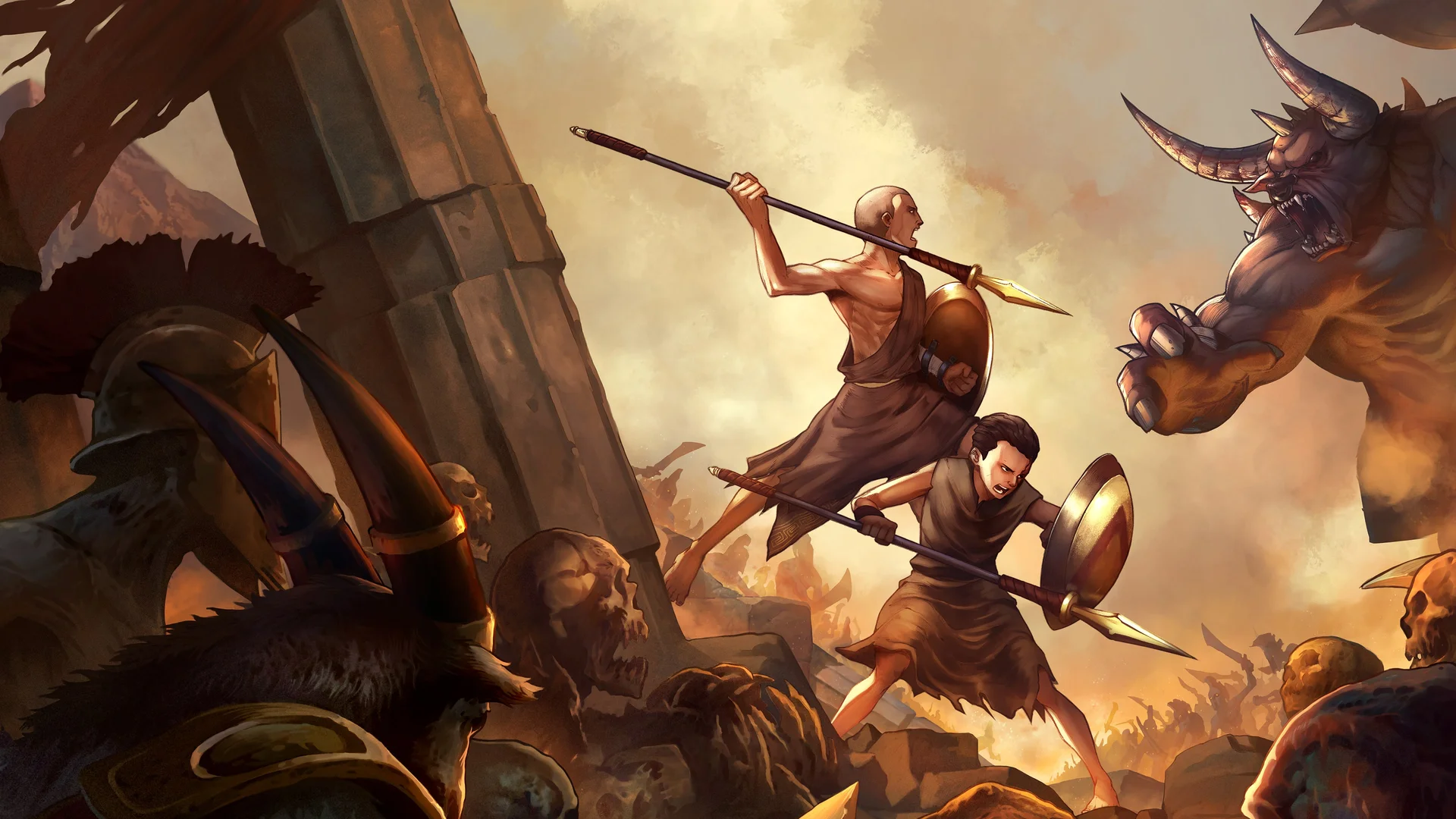
- God of War Sons of Sparta canon centers on Kratos' life in Sparta before fatherhood and godhood
- The reveal trailer frames the story with the creed: "Fear is a reaction. Courage is a decision"
- Core Spartan pillars: never on our backs, never left behind, always united
- The game is positioned as a beginning — "the legendary saga of gods and monsters... begins here"
- Canon status should be tracked against official sources, not community speculation
What Sons of Sparta Canon Covers
God of War Sons of Sparta canon tells the story of Kratos during his years as a Spartan warrior — a period explicitly framed as coming before he was a father and before he served as a guard. The official reveal trailer makes this positioning unambiguous through its own narration, establishing the game as an origin-era entry in the larger God of War saga.
Video Highlights:
- Narration establishes three life stages: Spartan first, then guard, then father
- The Spartan creed anchors the story: duty, courage, and unity
- Tagline frames the saga of "gods and monsters, tragedies and triumphs" as beginning here
- Combat tone emphasized: "Press your attack. Don't relent."
- Explicit statement: "This is only the beginning"
The reveal material gives us a clear canonical framing: this is a story about what Kratos was before the events fans already know. The trailer's language — "Before I was a father. Before I was a guard, I was a Spartan" — works as a reverse chronology, walking backward from the modern Norse-era Kratos to his Spartan roots.
The order of the narration matters. "Father" (the Norse era) and "guard" (his service years) are named first, then dismissed — meaning Sons of Sparta canon focuses on the earliest stage: the Spartan warrior. Treat any theory placing the game after God of War Ragnarok as speculation until confirmed.
The Spartan Creed as Canon Foundation
The reveal trailer codifies three battlefield principles as the philosophical backbone of the game's story. These are not throwaway lines — they function as the canonical value system of Sparta that Kratos absorbs, and likely the code he will either uphold or break across the narrative.
| Creed Line | Literal Meaning | Story Implication |
|---|---|---|
| "Never on our backs" | Never fight from a defeated position | Fallibility of pride; Spartan defiance |
| "Never left behind" | No warrior is abandoned | Brotherhood themes; loyalty conflicts |
| "Always united" | The phalanx fights as one | Collective duty vs. individual rage |
The line "Fear is a reaction. Courage is a decision" is the most quotable piece of canonical philosophy in the reveal. It echoes the entire franchise's long-running theme: Kratos' relationship with fear, rage, and the choice to be better than his worst impulses.
The "destruction and redemption" phrasing in the trailer directly mirrors the arc Kratos follows across the Greek and Norse eras. Sons of Sparta canon appears designed to show where that arc started — the seeds of both the destruction and the redemption.
How to Place Sons of Sparta in the Timeline
Because Sony has positioned this as a beginning, placing it correctly matters for lore discussion. Follow this method when evaluating any new trailer, interview, or gameplay drop.
Start with Official Framing
Use the reveal trailer's own chronology — Spartan era precedes the guard years, which precede fatherhood. Any placement theory must respect this ordering.
Cross-Check Character Details
Note Kratos' appearance, rank, tattoos, and equipment in each new footage drop. Visual markers help anchor which life stage the scene belongs to.
Track Named Characters and Gods
Keep a running list of every god, monster, and Spartan figure shown. Canon status for supporting cast should only be assigned once a character is officially named.
Separate Canon from Marketing
Trailer taglines set tone; they don't always confirm plot. Log poetic lines as thematic evidence, not literal story beats.
Update with Primary Sources
Revisit your notes each time PlayStation or Santa Monica Studio releases story details, and revise placements rather than defending old theories.
Community timelines, fan wikis, and YouTube theories frequently blend speculation with confirmed facts. When documenting canon, cite only official trailers, PlayStation Blog posts, and developer statements as primary evidence.
Canon Pillars: Tragedy, Triumph, and the Gods
The trailer's own summary line gives us four canonical story registers: gods and monsters, tragedies and triumphs, destruction and redemption. These map cleanly onto what long-time fans expect from a Spartan-era God of War story.
Gods and Monsters
- Mythological scale from the opening chapters
- Spartan campaign framing with divine interference
- Classic Greek bestiage teased by tone
Tragedies and Triumphs
- War victories weighed against personal cost
- The creed tested by real battlefield failure
- Seeds of Kratos' later grief
Destruction
- Aggressive combat ethos: "Press your attack. Don't relent"
- Sparta's expansion as a destructive force
- Kratos shaped by relentless warfare
Redemption
- The long arc begins in this era
- Courage-as-decision philosophy plants hope
- Origin of the man who seeks atonement later
| Story Register | Canonical Evidence | Long-Term Payoff |
|---|---|---|
| Gods and monsters | Trailer tagline, saga framing | Establishes Greek mythology stakes |
| Tragedy | "Tragedies and triumphs" pairing | Foreshadows Kratos' losses |
| Destruction | Aggressive combat narration | Explains his capacity for wrath |
| Redemption | "Destruction and redemption" arc | Connects to Norse-era growth |
By naming redemption in the very first trailer, the developers signal that Sons of Sparta is not just a war story — it's the first chapter of a saga fans already know the ending of. That dramatic irony is the core storytelling engine.
Canon Research Checklist
Whether you're writing wiki entries, lore videos, or forum deep-dives, use this checklist to keep your canon claims clean.
Canon Verification Checklist:
- Confirm every claim traces to an official trailer or PlayStation source
- Separate Spartan-era events from the guard and father eras
- Log the three creed lines and where they appear in materials
- Track all officially named characters and deities
- Mark unconfirmed theories clearly as speculation
Date every canon claim with the source it came from — for example, "Spartan creed lines, Official Reveal Trailer, 2026." When future story drops contradict old assumptions, dated sourcing makes corrections painless.
FAQ
Q: What does God of War Sons of Sparta canon cover?
Based on the official reveal trailer, the canon covers Kratos' years as a Spartan warrior — the stage before he was a guard and long before he was a father. The narration explicitly walks backward through his life stages to land on his Spartan origins.
Q: Is Sons of Sparta a prequel to the Greek-era God of War games?
The trailer positions it at the beginning of 'the legendary saga of gods and monsters,' which strongly suggests an early or origin-era placement. However, the exact point relative to the original 2005 game hasn't been fully detailed yet — treat precise timeline claims as pending confirmation.
Q: What is the Spartan creed in Sons of Sparta?
The reveal trailer states three principles: 'Never on our backs. Never left behind. Always united.' Combined with 'Fear is a reaction. Courage is a decision,' these lines form the philosophical foundation of the story.
Q: Where can I verify new canon details as they release?
Stick to primary sources: the official PlayStation YouTube channel, the PlayStation Blog, and statements from Santa Monica Studio. The official reveal trailer (2026) is currently the anchor source for all confirmed canon material.